


Innovation in shoulder arthroplasty prosthesis design has led to a paradigm shift in recent years to “platform” (convertible) humeral stems that obviate the need for stem extraction when converting between non-constrained anatomic total shoulder arthroplasty and reverse arthroplasty.

How Should We Approach Superior Glenoid Wear?
In the article “Reverse total shoulder glenoid baseplate stability with superior glenoid bone loss” by Martin et al, the authors looked to quantify glenoid baseplate stability with worsening superior glenoid bone loss.

How Do I Manage Glenoid Bone Loss?
Following the legacy of hip and knee replacements in relieving pain and improving function for patients with arthritis, shoulder replacements are now the fastest growing joint replacement.

What Options Are Available for Extensive Proximal Humeral Bone Loss?
The use of press-fit humeral components for reverse shoulder arthroplasty has become more common in shoulder replacement surgery. Historically, humeral fixation was achieved with cementation techniques.

How Can We Improve Accuracy in TSA?
The authors of this randomized clinical study compared 15 anatomic total shoulder arthroplasties performed with patient-specific instrumentation to 16 aTSA cases performed with standard surgical instrumentation.

What are the Benefits of CAOS for Shoulder Replacement?
I have now performed my first 40 shoulder replacement cases with computer assisted orthopedic surgery (CAOS).

Insights in Computer-Assisted Surgery for TSA
Total shoulder arthroplasty (TSA) can be challenging surgery, due to exposure difficulties and limited access to portions of the anatomy.
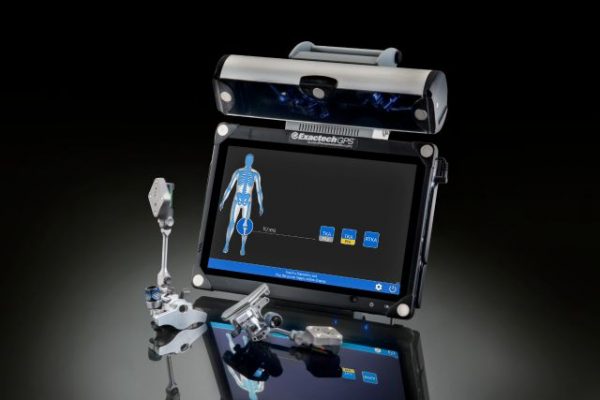
If Computer-Assisted Surgery is More Accurate, Why Isn’t it More Prevalent?
There are two things that all total knee surgeons can agree on when it comes to imageless computer navigation: It is more accurate than mechanical instrumentation in obtaining coronal alignment of the limb, and it is painful to adopt into one’s practice.
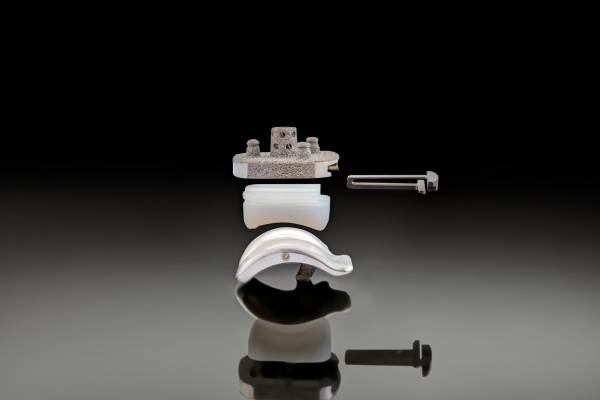
A New Perspective in Total Ankle Arthroplasty
As a group, arguably we have unparalleled clinical and research experience with TAA. Each of us has formulated potential improvements to the existing body of knowledge of TAA and has had some hand in the improvement of existing total ankle systems or development of potential new systems.

Additive Manufacturing Technology for Orthopedic Implants
Additive manufacturing, also known as 3D printing, is a process that creates a three-dimensional object by building successive layers of raw material, such as metal, plastic, tissue scaffolds, concrete and even food.