


Shoulder Arthroplasty Smart Score: The World’s First Machine Learning-Derived Outcome Measure | Surgeons and researchers worldwide can now quantify shoulder patient outcomes with a new, more efficient measure called “Smart Score”.

What About Superior Erosion?
Read Complete Study: Reverse Total shoulder Arthroplasty with a Superior Augmented Glenoid Component for Favard Type – E1, E2 and E3 Glenoids Superior glenoid wear is often under-appreciated when planning…
Read More 
How GPS Navigation for Shoulder Arthroplasty Changed My Practice
As I look back on my career in orthopedics, the journey has not been one that I would have ever predicted. I completed a sports medicine/upper extremity fellowship in orthopedic…
Read More 
The Importance of Educating Patients on Expected Glenoid Wear and Consequences of Its Progression
Read complete study: Natural history of glenoid bone loss in primary glenohumeral osteoarthritis: how does bone loss progress over a decade? When it comes to shoulder arthritis, shoulder arthroplasty is…
Read More 
Managing Expectations for External Rotation After RSA
Read complete study: The influence of preoperative external rotation weakness or stiffness on reverse total shoulder arthroplasty Improvement in external rotation following Reverse Shoulder Arthroplasty (RSA) is an important topic. Now…
Read More 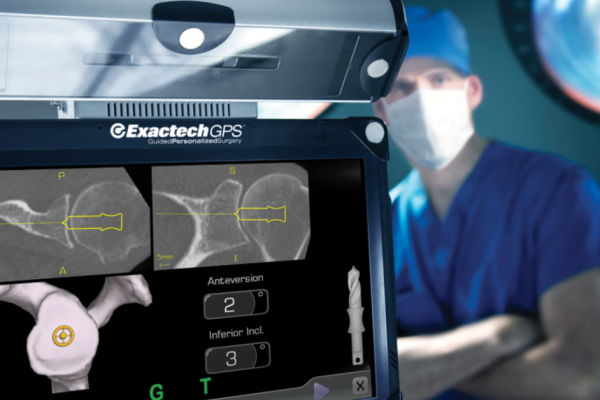
The Goal? Accurate Placement of the Glenoid Component.
Computer navigation leads to more accurate glenoid targeting during Total Shoulder Arthroplasty (TSA) compared with three-dimensional (3D) preoperative planning alone.
The Impact of Preoperative Patient Education on Clinical Outcomes
A 2017 study published in the Current Reviews on Musculoskeletal Medicine stated that patient education prior to joint replacement surgery has been shown to decrease anxiety, improve post-operative pain control, provide more realistic expectations of surgery, and increase the patient’s understanding of their surgery.

The Power of Data Collection
With 35 collection sites across the United States and Europe, the Equinoxe database includes information on demographics, comorbidities, implant specifics, 7 PROMs, ROM, radiographic data, and complications—all using standardized forms—for more than 10,000 shoulder cases. This multi-center collection using standardized forms creates the volume of evidence needed to produce the necessary statistical power for accurate analysis of the data.
Creating Efficiency in the O.R. with Streamlined Instrument Sets
The number of total joint replacements is growing rapidly, and the current trend suggests that the number of total joints performed will double by 2030.
Multilevel Modeling of Resection Accuracy: Insights from 10,144 Clinical Cases using A Contemporary Computer-Assisted Total Knee Arthroplasty System (Abridged Version)
As a successful treatment for advanced inflammatory and degenerative knee arthritis, total knee arthroplasty (TKA) is projected to expand by 600% to more than three million cases annually by 2030.