Return to Newsroom

Features & Stories

250,000 Cases: The Reverse Shoulder System That Helped Transform Shoulder Arthroplasty

For nearly 20 years, Advita Ortho’s Equinoxe Reverse Shoulder has reshaped how surgeons treat some of the most complex shoulder conditions. With this system, reverse shoulder arthroplasty has shifted from a niche and technically demanding procedure to the standard of care.
Share this article
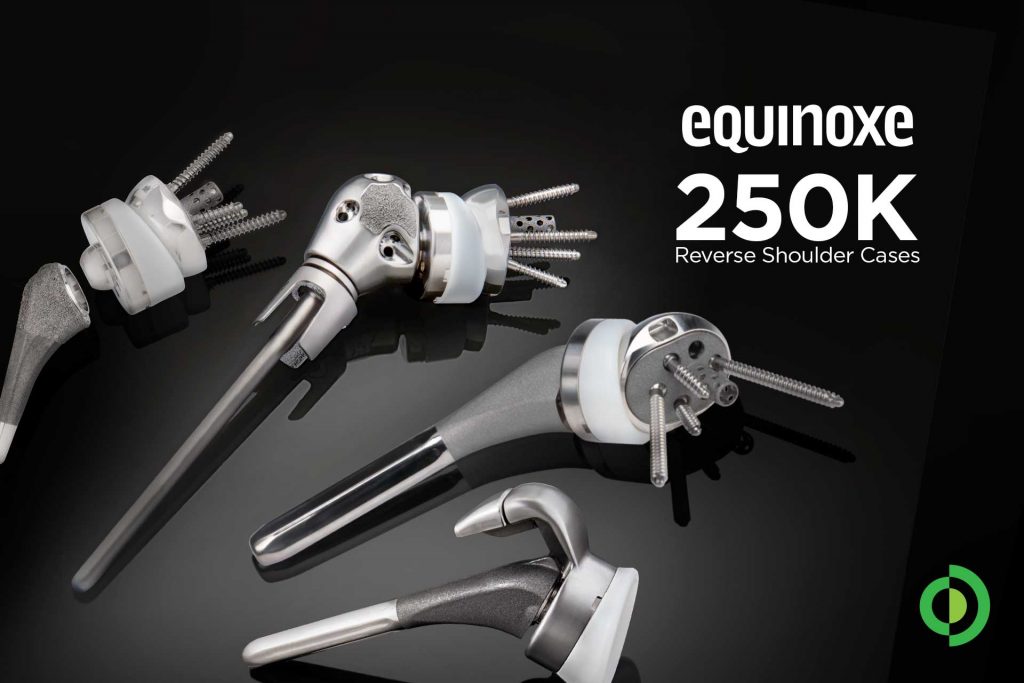
Advita Ortho’s Equinoxe Reverse Shoulder System, celebrating 20 years and 250 thousand cases
0+
Procedures performed worldwide since 2007
0+
Patients in multi-center clinical study
0
Clinical sites across the US, Europe & Australia
0+
Peer-reviewed publications

Now, we’re celebrating a major milestone: More than 250,000 Advita Equinoxe Reverse Shoulder procedures have been performed worldwide since the first case in March 2007. This moment offers the opportunity for the team to reflect on the innovation, collaboration and clinical insights that shaped the system and the Equinoxe legacy.

The Origin of Reverse Shoulder Innovation

The development of the Advita Equinoxe Reverse Shoulder began in 2005, following the 2004 launch of the anatomic and fracture stems. At the time, reverse shoulder arthroplasty was still emerging, with early designs like the Grammont system just beginning to influence how the procedure would evolve. Only a few companies offered a solution, and adoption required extensive surgeon retraining, often through certification at cadaver labs.

Advita Ortho’s Equinoxe Reverse Shoulder system started in France. French house on left and Dr Crosby and Dr Wright on right side of image
Location of one of the first Equinoxe Shoulder System meetings in Bordeaux, France (L), Drs. Lynn Crosby and Thomas Wright at an orthopedic surgical skills lab (R)

For Chris Roche, now Sr. Vice President of Extremities at Advita, and the development team, the challenge was to rethink what a better reverse shoulder prosthesis could be. This resulted in leveraging the biomechanical strengths of the Grammont design while addressing its own limitations, like scapular notching, and introducing new features that could improve how the implant performs in practice.

“We had just launched the Equinoxe anatomic system the year before, and the idea of removing a well-fixed stem to convert a patient to a reverse didn’t make a lot of sense,” Roche recalled. “Could we improve surgical efficiency in primary cases by leveraging the same implants and instruments from our anatomic system? That was the genesis of our platform stem, which became the central feature of the Equinoxe portfolio.”


...Could we improve surgical efficiency in primary cases by leveraging the same implants and instruments from our anatomic system? That was the genesis of our platform stem...
Chris RocheSr. VP of Extremities, Advita Ortho


Working closely with the surgeon design team, Drs. Joseph Zuckerman, Lynn Crosby, Pierre-Henri Flurin, and Thomas Wright, the team used advanced computer modeling techniques to refine reverse shoulder design parameters, like humeral neck angle, glenosphere diameter, glenosphere thickness, glenosphere offset and humeral liner constraint, to identify more optimal combinations of design features that could improve range of motion and stability, while minimizing scapular impingement.
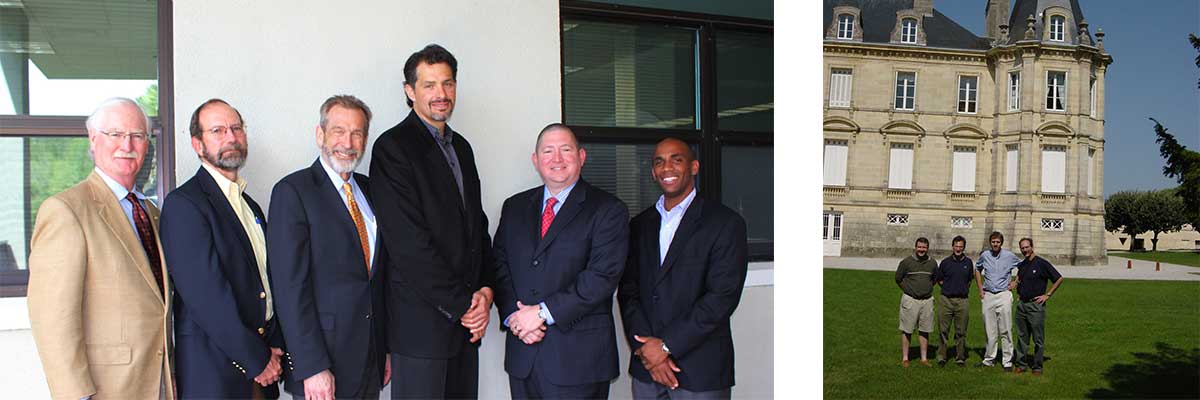
Advita Ortho Equinoxe Reverse Shoulder System Design Team, Dr Wright, Dr Zuckerman, Dr Grey, Dr Routman, Dr Gilot
Drs. Lynn Crosby, Thomas Wright, Joseph Zuckerman, Sean Grey, Howard Routman and Gregory Gilot (L). and Part of the original Equinoxe Reverse Shoulder Team in Bordeaux, France (R).

That optimization analysis ultimately led to development of a next-generation reverse shoulder system designed to balance stability, mobility and longevity.

“We have continually and consistently conceived new solutions to the clinical problems surgeons face when performing shoulder arthroplasty. That continuous innovation is the distinguishing advantage of the Equinoxe and of Advita,” said Dr. Zuckerman. “I don’t think that push for advancement is present anywhere else in the world of shoulder arthroplasty. No other company has a 20-year track record of innovation matching the Equinoxe.”

The deep collaboration between surgeons and engineers still drives the Equinoxe development team’s guiding philosophy: design unique implants that solve unmet clinical needs.

Dr. Flurin noted, “The Equinoxe team has brought to market many first-to-world innovations over the past two decades, including rTSA augments, rTSA endoprostheses, CT-based shoulder navigation, tuberosity replacement systems, load-sensing smart instruments, machine learning-based predictive outcomes tools, and most recently, scapular plating systems. Each of these unique innovations was borne from our clinical research and experience and developed to provide surgeons with the best possible tools and technologies to help them treat their patients in the most precise and reliable manner.”

Redefining rTSA Biomechanics

“The Equinoxe Reverse Shoulder was built on a simple but important idea: preserve what worked, and rethink what didn’t,” Dr. Wright added. “Our design maintained the medialized center of rotation introduced by Grammont to support efficient deltoid function, while introducing humeral lateralization to increase deltoid wrapping and rotator cuff muscle tension, in order to improve joint stability and overall motion. It was a shift that allowed our design to enhance the body’s natural mechanics, rather than work against it.”

From there, the work continued to evolve.

The development team continued to study how implant design, surgical technique and patient anatomy influence the biomechanics of a reverse shoulder. Through extensive research, they began to quantify how these variables impact range of motion, impingement, muscle function and joint forces.

That work led to a transformative discovery and established a new design classification system, helping the industry redefine how it comprehends reverse shoulder arthroplasty and creating a clearer framework for how implants interact with the deltoid and surrounding structures.


...What began as clinical observation evolved into the development of a biomechanically grounded classification system that has become the industry standard...
Howard Routman, DOOrthopedic Surgeon


“Early in our work with the Equinoxe, it became clear that meaningful differences existed across reverse shoulder designs – differences that lacked a shared language to describe them,” said Howard Routman, DO. “What began as clinical observation evolved into the development of a biomechanically grounded classification system that has become the industry standard for describing reverse shoulder arthroplasty implant geometry. That kind of progress doesn’t happen by accident; it’s the product of a surgeon-engineer team driven by scientific curiosity and a shared commitment to understanding the device at a fundamental level.”

Today, that reverse shoulder design classification system and its terminology have been widely adopted by surgeons and industry alike, influencing how reverse shoulder designs are discussed and understood.

A Long-term Commitment to Clinical Research

That deeper understanding of biomechanics soon moved from theory into long-term clinical study – using the same design principles taken from early modeling and bench testing – where it could be observed in practice.


0.0-
0.0%

Low instability rates

<0%
Low glenoid loosening rate
0%
Low scapular/acromial fracture rate
>0%
Patient satisfaction

The Equinoxe multi-center clinical study, initiated in 2004, now spans more than two decades and includes over 26,000 patients across 45 sites in the United States, Europe and Australia.

Over time, the research initiative demonstrated strong outcomes across a wide range of patient populations, reinforcing the connection between biomechanical insight and real-world performance.

“We made a decision from the beginning to invest in clinical research, to validate what we built and continuously learn from it,” Roche said. “After all, following the same patients over time to measure clinical outcomes helps us to objectively identify what is working well and what we need to improve.”

That long-term commitment to clinical research has led to the development of one of the largest single shoulder prosthesis clinical databases, enabling more robust studies using broader datasets to facilitate more clinically meaningful findings.

As Roche explained, “Larger datasets allow for more valid and generalizable insights, helping surgeons better understand outcomes across a wide range of diverse patient populations and indications.”

That data has been valuable to refine the system and guide future developments, and in many ways, it has transformed innovation into objective evidence. Research highlights include:

  • Low instability rates: 1-1.4%6,50
  • Low glenoid loosening rates under 1%50
  • Low 1.52% scapular/acromial fracture rate7,8
  •  >93% patient satisfaction after Equinoxe rTSA2,3

These findings have helped establish the Equinoxe Shoulder as one of the most extensively researched shoulder systems in the world over the past 20 years.

A Platform That Continues to Evolve

While the core design principles of the Equinoxe Reverse Shoulder have remained consistent, the portfolio has continued to evolve to address new clinical challenges and unmet needs.

Over the past decade, the Equinoxe Reverse portfolio has expanded to include a comprehensive platform of solutions to address complex glenoid bone loss, proximal humeral bone loss, smaller patient anatomies and other additional implant configurations to help a broader range of patients.

“What I love most about our team is that we are never satisfied. We will always continue to innovate,” Dr. Flurin said. “From the beginning, our goal was to keep expanding the platform to solve more and more complex problems. The future includes the development of unique technologies to improve surgical execution/planning, including new AI-based tools to facilitate more evidence-based decision making.”

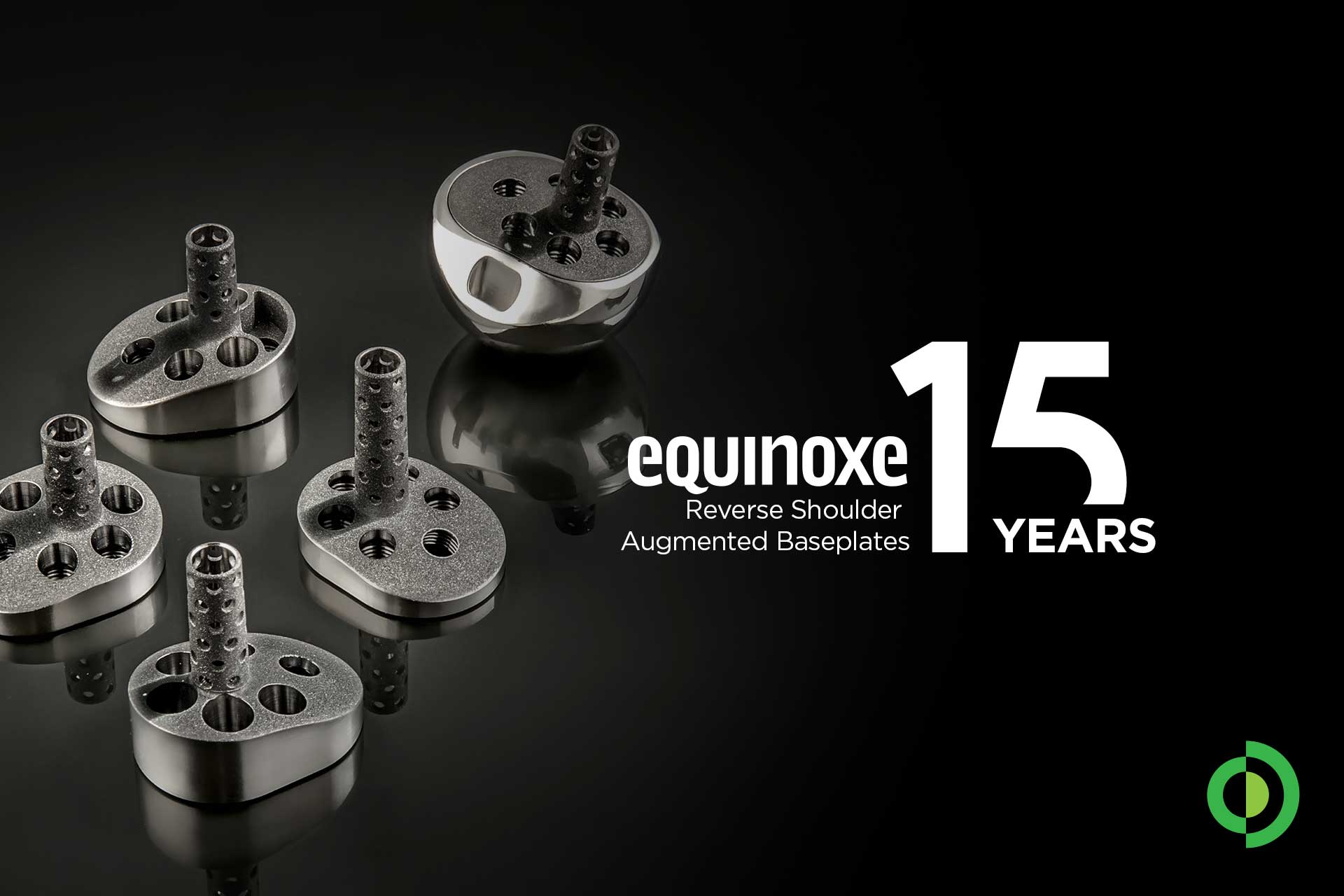
Part of Advita Ortho's Equinoxe Reverse Shoulder System baseplate portfolio
Part of Advita Ortho’s Equinoxe Reverse Shoulder System baseplate portfolio

Engineering and Manufacturing Behind the System

Most Equinoxe shoulder implants are manufactured in-house, enabling close collaboration between design engineers, manufacturing specialists, and regulatory and quality team members.

This integrated, cross-functional team approach allows engineers to move quickly from design concepts to validated implant solutions while maintaining strict quality control standards.

“We manufacture almost all our shoulder implants in-house,” said Tom Vanasse, Sr. Director of Engineering. “That expertise gives us the ability to move faster and work more closely with our quality, manufacturing and regulatory colleagues so we can continuously improve what we’re building.”

At scale, that capability becomes even more significant. Today, tens of thousands of implants are produced each month, each one requiring the same level of quality, accuracy, precision and consistency.

“Our quality, operations and regulatory team members play a critical role in translating our sophisticated implant and instrument designs to ensure our surgeon customers receive consistent products for use in operating rooms around the world,” Vanasse said.

Clinical Impact at Scale

Today, the Advita Equinoxe Reverse Shoulder is supported by clinical data from a multi-center research team that has produced more than 150 peer-reviewed publications.
Its growth over the past two decades reflects not only its clinical performance, but the confidence surgeons have placed in the system to treat increasingly complex cases.

But for Roche, the significance of 250,000 cases goes far beyond scale.

“When we began developing the Equinoxe Reverse Shoulder in 2005, reverse shoulder arthroplasty was still relatively uncommon,” he said. “Over time, advances in implant design, instrumentation and surgical technique have expanded its use, allowing more patients to benefit from this amazing procedure.”

That number represents more than adoption. It reflects progress, years of collaboration between surgeons and engineers that have made the procedure more accessible, more predictable and more widely used.

Surgeons across the globe now rely on the Equinoxe Reverse Shoulder to treat a wide range of shoulder conditions, from routine arthroplasty to complex reconstruction.

But the most meaningful measure of impact is not the number of implants or publications. It is the 250,000 patients whose mobility has been improved – and whose independence and quality of life has been restored.

What’s on the Horizon

Looking toward the future, the team will continue advancing implant design and creating next-generation systems that are more adaptable and more personalized for individual patients’ soft tissue and anatomy. Development of enabling technology, including advanced preoperative planning, computer navigation and clinical decision support software, will keep progressing, allowing surgeons to more seamlessly integrate digital tools into their clinical workflows.

“Advita will continue to seek unique clinical solutions to complex problems in shoulder arthroplasty, leveraging the power of a robust clinical outcomes research database and computer-guided navigation technological advancements,” said Ian Byram, MD.

Bradley Schoch, MD, added: “We are excited to watch the evolution of the Advita Equinoxe brand as we introduce next-generation implant designs built on this strong foundation, creating a more customizable portfolio that meets the needs of each individual patient’s bone and soft tissue.”


...we hope that deeper knowledge of the functioning of shoulder replacements will allow us to design implants that can fine tune to offer surgeons even greater intraoperative flexibility...
Peter Chalmers, MDOrthopedic Surgeon


“The Equinoxe System’s history of innovation driven by biomechanical analysis, backed with clinical results, challenges us to achieve even higher heights for the future,” concluded Peter Chalmers, MD. “In that future, we hope that deeper knowledge of the functioning of shoulder replacements will allow us to design implants that can fine tune to offer surgeons even greater intraoperative flexibility to provide patients bespoke solutions for the best possible outcomes.”


Explore the clinical data and long-term outcomes behind the Equinoxe Reverse Shoulder System at https://advita.com/shoulder/equinoxe-reverse-shoulder-system/ 

Press & Media Contacts

Courtney Adkins
Marketing Communications Director
courtney.adkins@advita.com

Nancy Walsh
VP, Corporate & Marketing Communications
nancy.walsh@advita.com

Discover more

Sign up to receive email alerts with
the latest news, stories and updates.


Sign up to receive email alerts with the latest news, stories and updates.