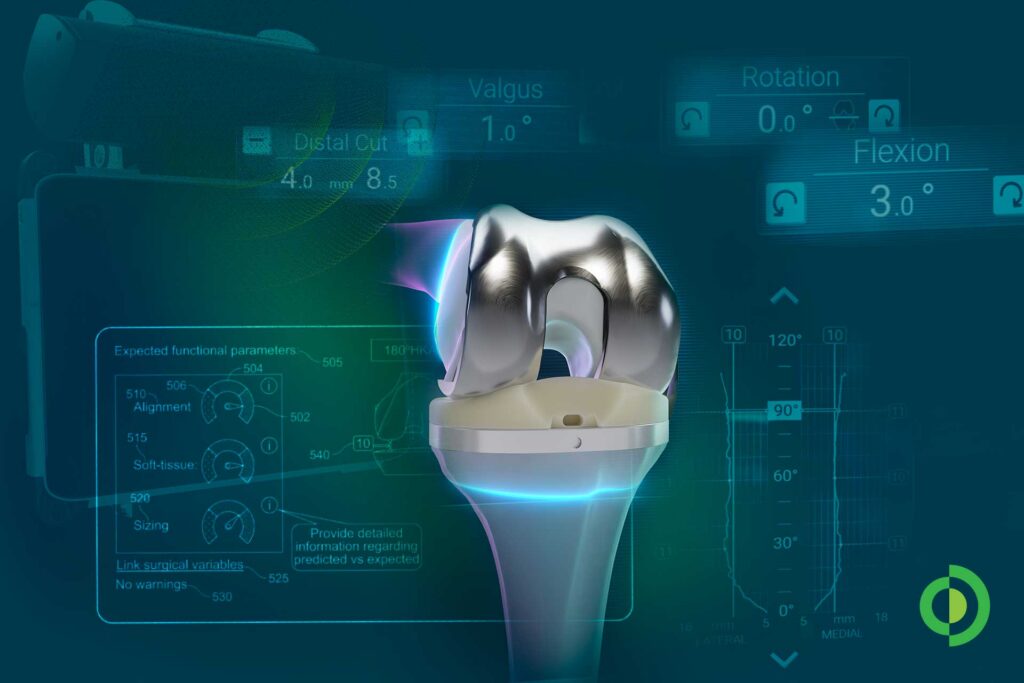
Advita Ortho announced a series of new peer-reviewed research supporting the continued evolution of its Newton® knee balancing technology, advancing the potential for more predictive, measurement-based decision-making in total knee arthroplasty.1-4
Through real-time measurement of ligament behavior across the full range of motion, Newton converts soft tissue dynamics into actionable intraoperative guidance, supporting more consistent and reproducible surgical execution.
...This body of research demonstrates how objective soft tissue data can be processed to enhance the planning of patient-specific targets...
“This body of research demonstrates how objective soft tissue data can be processed to enhance the planning of patient-specific targets,” said Laurent Angibaud, Senior Vice President, Advanced Surgical Technologies at Advita Ortho. “As this dataset expands and is reinforced by a growing volume of peer-reviewed research, it becomes increasingly powerful. Backed by our growing intellectual property portfolio5-7, we are enabling more consistent, reproducible planning today, while laying the groundwork for predictive decision-making in the future.”
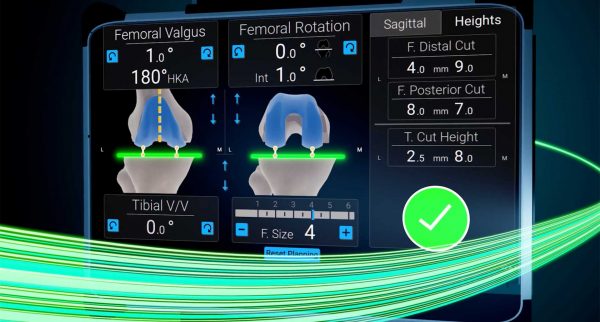
Across recent publications in leading journals, including the Journal of Arthroplasty, Journal of Orthopaedic Research and Arthroplasty Today, studies demonstrate the impact of integrating real-time dynamic soft tissue measurements into surgical planning. One study established the benefit of considering the soft-tissue laxity as an input to fuel the planning algorithm, while additional research demonstrated the potential for machine learning models to support predictive decisions, including tibial insert selection and individualized balancing strategies.
A newly introduced classification framework further advances this work, providing a structured method to define knee phenotype based on dynamic intraoperative measurements. Together, the expanding evidence base illustrates how objective measurement, machine learning and standardized frameworks can drive more consistent and personalized outcomes in total knee arthroplasty.
...real-time, objective data across the range of motion from the Newton solution already provides a clearer understanding of each patient’s knee and supports more reproducible decisions...
“For surgeons, achieving the right balance in a knee replacement remains one of the most complex aspects of the procedure,” said James Huddleston, MD, of Stanford University. “While real-time, objective data across the range of motion from the Newton solution already provides a clearer understanding of each patient’s knee and supports more reproducible decisions, this body of research helps establish the foundation for translating those insights into self-generated patient-specific planning.”
Newton Knee soft tissue balancing is part of Advita Ortho’s Active Intelligence® ecosystem, which provides personalized planning, surgical guidance and data insights across total joint procedures. As the platform evolves, Advita aims to continue to expand its growing data foundation to support future advancements in smart planning, predictive analytics and surgical decision support.
View the entire suite of digital solutions designed to support the continuum of care www.AdvitaAI.com
References:
- Alexa K. Pius, Prudhvi T. Chinimilli, Laurent D. Angibaud, Amaury Jung, Corey A. Jackson, James I. Huddleston, Unsupervised Machine Learning Drives Dynamic Alignment Classification in Navigated Total Knee Arthroplasty, The Journal of Arthroplasty, 2026, in press, doi: 10.1016/j.arth.2026.04.091
- Chinimilli PT, Angibaud LD, Jung A, Huddleston JI 3rd. Machine Learning Based Prediction of Tibial Insert Thickness in Total Knee Arthroplasty From Intraoperative Knee Joint Laxity Data. J Orthop Res. 2026 Feb;44(2):e70155. doi: 10.1002/jor.70155\
- Chinimilli PT, Angibaud LD, Jung A, Naji O, Huddleston JI 3rd. Evaluating Ligament Laxity Profiles Across Full Range of Motion in Total Knee Arthroplasty: Insights Into the Tibia-First Technique. J Orthop Res. 2026 Mar;44(3):e70181. doi: 10.1002/jor.70181
- Sodhi N, Angibaud LD, Chinimilli PT, Kerveillant F, Huddleston JI 3rd. Full Motion Arc, Laxity-Based Planning for Total Knee Arthroplasty: The Next Milestone for Enabling Technology. Arthroplasty Today. 2026 Mar 2;38:101959. doi: 10.1016/j.artd.2026.101959
- US12,239,384: Computer-based platform for implementing an intra-operative surgical plan during a total joint arthroplasty. Issued on March 4, 2025
- US12,383,338: Computer-based platform for implementing an intra-operative surgical plan during a total joint arthroplasty. Granted on August 12, 2025
- US12,544,141: Computer-based platforms for implementing a weight-based personalized implant planning during a total joint arthroplasty and methods of use thereof. Granted on February 10, 2026